
Living to 100 - Independent, Capable, and Purposeful
Many people want to live a long life. But living longer is not the real goal.
Living well is.
A healthy life means being able to think clearly, move freely, take care of yourself, and contribute to others-even at age 100. This is called healthspan. Healthspan matters more than lifespan.
Studies show that about 15-16% of adults over age 50 already have early changes in thinking and memory, called Mild Cognitive Impairment (MCI). These changes sit between normal aging and dementia. Many people begin to experience them in midlife without realizing it.
That is why discipline, awareness, and early action matter.
At the Athens Heart Center network, neurocognitive testing helps people understand how their brain is working today and what they can do to protect it for the future. Dr. Manto focuses on early detection, simple explanations, and practical steps so patients can stay independent for as long as possible.
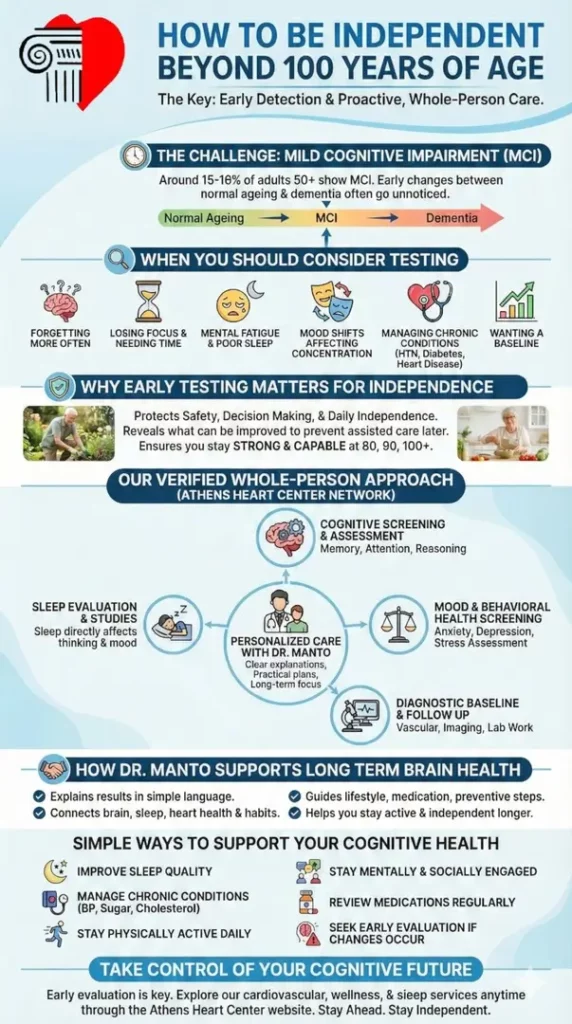
When Should You Consider Cognitive Testing?
- Forgetting things more often
- Trouble focusing or needing more time to finish daily tasks
- Feeling mentally tired during the day
- Poor sleep or waking up still tired
- Mood changes that make it harder to concentrate
- Long-term conditions like high blood pressure, diabetes, or heart disease
- A desire to create a baseline to track brain health over time
Why This Matters for Living Independently
- Safety
- Judgment
- Daily decision-making
- Independence
How Our Services Work Together
Brain health is connected to the heart, sleep, mood, and daily habits. That is why the Athens Heart Center and Athens Sleep and Wellness Center work together.
Cognitive Screening and Assessment
Short, structured tests that check memory, attention, thinking speed, and reasoning.
Sleep Evaluation and Sleep Studies
Home sleep testing and sleep evaluations, because poor sleep hurts thinking, mood, and energy.
Mood and Mental Health Screening
Checks for anxiety, depression, and stress that can affect focus and memory.
Diagnostic and Follow-Up Testing
In-house testing, imaging, and lab work to look for medical causes of cognitive change.
Personalized Care With Dr. Manto
Clear explanations, medication review, chronic condition support, and a realistic plan focused on long-term independence.

How Dr. Manto Helps Patients Protect Their Brain
- Explains results in clear, simple language
- Connects brain health to sleep, heart health, and daily routines
- Guides lifestyle changes and preventive care
- Focuses on keeping people active, useful, and independent
Simple Habits That Protect Your Brain
Discipline does not mean perfection.
It means doing the basics, consistently.
Small daily habits make a big difference:
- Get quality sleep
- Control blood pressure, blood sugar, and cholesterol
- Move your body every day
- Stay mentally and socially engaged
- Review medications regularly
- Seek help when something feels different
These habits may not feel exciting, but they pay off-year after year, all the way to the end of life.

Take Control of Your Healthspan
If you or someone you love has noticed changes in thinking, memory, or daily function, early evaluation can bring clarity and peace of mind.
The goal is not simply to reach age 100.
The goal is to reach 100 while still thinking clearly, caring for yourself, contributing to others, and living with purpose.
The Athens Heart Center offers complete cardiovascular, sleep, and wellness care to support that goal-today and for the years ahead.
References
- Lifespan and Healthspan: Past, Present, and Promise – The Gerontologist (NIH/PMC)
- Estimating the Prevalence of Dementia and Mild Cognitive Impairment in the United States – JAMA Neurology
- Sleep Quality in Midlife Associated with Cognitive Health Years Later – National Heart, Lung, and Blood Institute (NIH)
- Cardiovascular Risk Factors and Accelerated Cognitive Decline – Neurology Journal
- Physical Activity Boosts Brain Health – Centers for Disease Control and Prevention (CDC)






Share Your Thoughts
No comments yet — be the first to comment!