
Hiding in Plain Sight: How Athens Heart Center Connects the Dots to Diagnose and Treat Cardiac Amyloidosis
By the Team at Athens Heart Center & Specialty Clinics
For many years, transthyretin cardiac amyloidosis, also known as ATTR-CM, was thought to be rare. Today, we know something different. It is not rare. It is underdiagnosed.
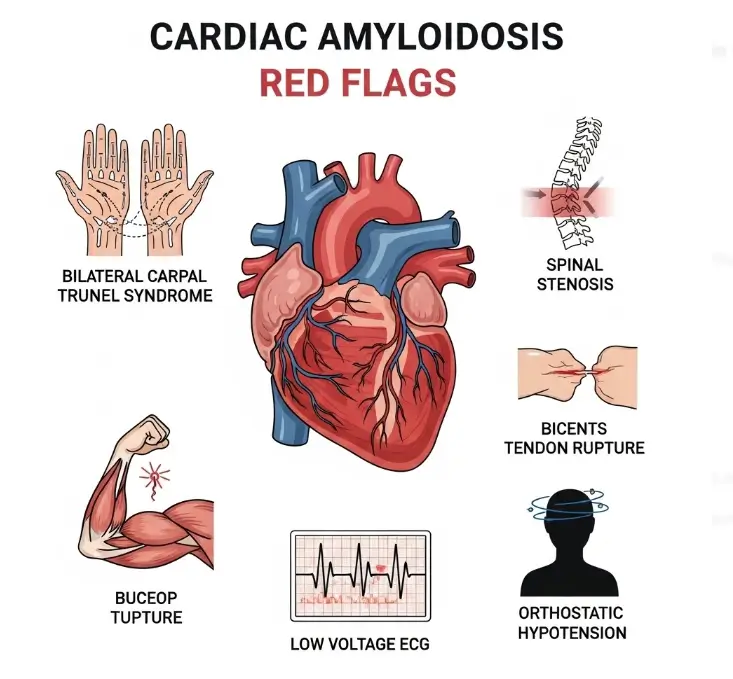
Across the United States, especially in adults over age 60, cardiac amyloidosis is often hiding behind common diagnoses such as heart failure with preserved ejection fraction, carpal tunnel syndrome, spinal stenosis, or unexplained neuropathy. Patients may see multiple specialists over several years before anyone connects the pattern.
At Athens Heart Center in Athens, Georgia, our mission is simple. We connect the dots earlier so patients receive answers and treatment before irreversible heart damage occurs.
Why Cardiac Amyloidosis Is Frequently Missed
Cardiac amyloidosis is a systemic condition. Abnormal proteins misfold and deposit in tissues, including the heart muscle. Over time, the heart wall becomes stiff, leading to symptoms such as shortness of breath, swelling, fatigue, and irregular heart rhythms.
But long before significant heart symptoms appear, patients may experience other warning signs.
They may develop bilateral carpal tunnel syndrome. They may undergo surgery for spinal stenosis. They may complain of tingling in their feet or persistent joint discomfort. These symptoms often occur years before advanced heart failure develops.
Because these issues are commonly treated in isolation, the broader picture can be missed.
The Multispecialty Advantage
One of the strengths of Athens Heart Center is our integrated care model. Our clinic brings together cardiology, pain management, sleep medicine, and geriatric care under one coordinated system.
This structure matters.
When a patient seen in pain management for carpal tunnel syndrome also reports subtle shortness of breath, our providers communicate. When a geriatric patient with fatigue has thickened heart walls on echocardiogram, we look beyond routine explanations. Instead of treating each symptom independently, we evaluate whether they may share a systemic cause.
That collaborative approach allows us to identify potential cardiac amyloidosis earlier than traditional referral based systems often permit.
Advanced Diagnostic Testing Close to Home
Historically, diagnosing cardiac amyloidosis required invasive heart biopsies or referral to academic medical centers. For many older adults, this meant travel, delays, and fragmented care.
Athens Heart Center now offers Technetium Pyrophosphate, or PYP, scanning on site. This nuclear imaging test is recognized in national cardiology guidelines as a reliable, noninvasive method for diagnosing ATTR cardiac amyloidosis when combined with appropriate laboratory evaluation.
The process involves administering a tracer that binds to amyloid deposits. Imaging then reveals whether the heart muscle shows characteristic uptake patterns consistent with ATTR.
For patients, this means no hospital admission and no need to travel long distances. Diagnostic evaluation can begin and often conclude within our clinic.
Following National Safety Guidelines
It is medically essential to distinguish ATTR from AL amyloidosis, a different and more urgent form that requires hematology and oncology management.
Before confirming ATTR, we perform serum and urine immunofixation and free light chain testing to rule out AL amyloidosis. This step follows established United States cardiology and hematology guidelines to ensure patient safety and diagnostic accuracy.
If laboratory results suggest AL amyloidosis, we coordinate immediate referral to oncology. If testing excludes AL, we proceed with confidence in managing ATTR locally.
Every step is taken in alignment with evidence based standards of care.
Treatment That Changes the Course of Disease
Early diagnosis matters because effective therapies are available.
Medications such as tafamidis and other transthyretin stabilizers have been shown in clinical trials to slow disease progression in patients with ATTR cardiomyopathy. These therapies work by stabilizing the transthyretin protein, reducing further deposition in the heart.
While treatment does not reverse existing scarring, it can significantly delay worsening heart failure and improve survival when started early.
Because diagnosis, cardiology management, rhythm monitoring, and medication oversight occur within the same clinic, our patients benefit from continuity of care. We monitor for complications such as atrial fibrillation and fluid overload and adjust therapy as needed to reduce hospitalization risk.
Why Early Screening Matters
Time is the most critical factor in cardiac amyloidosis.
Every month of delayed recognition allows additional protein deposition in the heart muscle. Once advanced stiffness develops, symptoms become harder to manage.
Adults over 60 with heart failure with preserved ejection fraction, unexplained thickened heart muscle, bilateral carpal tunnel syndrome, spinal stenosis, or persistent neuropathy should consider discussing screening with their physician. Early evaluation does not mean everyone will have amyloidosis. It simply means the possibility will not be overlooked.
At Athens Heart Center, we believe patients deserve thorough evaluation, clear communication, and coordinated care. Our goal is not only to diagnose disease but to preserve independence, mobility, and quality of life.
Cardiac amyloidosis may be hiding in plain sight. With awareness, collaboration, and adherence to national diagnostic guidelines, it does not have to remain hidden.
If you or a loved one have questions about unexplained heart failure symptoms or related conditions, our team is here to help guide you through the next steps with clarity and compassion.





Share Your Thoughts
No comments yet — be the first to comment!