Defeating the Silent Epidemic: Fatty Liver Treatment at Athens Heart Center & Specialty Clinics
Metabolic Dysfunction-Associated Steatotic Liver Disease (MASLD), previously known as non-alcoholic fatty liver disease (NAFLD), is rapidly becoming one of the most significant metabolic health concerns worldwide. Often referred to as a “silent disease,” MASLD can develop without noticeable symptoms for years while gradually damaging the liver.
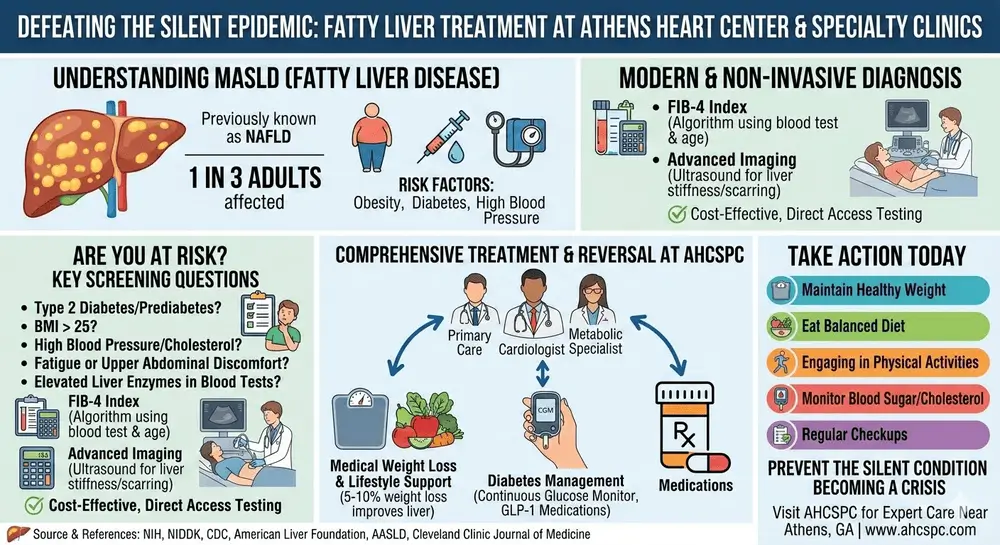
Health experts estimate that nearly one in three adults may have some degree of fatty liver disease, often without knowing it. The condition is closely linked with modern lifestyle factors such as weight gain, insulin resistance, high blood pressure, and type 2 diabetes. When left untreated, MASLD can progress to serious complications including liver fibrosis, cirrhosis, liver failure, and even liver cancer.
According to the National Institutes of Health (NIH), metabolic disorders affecting the liver are becoming increasingly common due to rising rates of obesity and diabetes. The encouraging news, however, is that fatty liver disease is often reversible when detected early.
At Athens Heart Center & Specialty Clinics (AHCSPC), physicians focus on early detection, personalized treatment, and long-term metabolic health management to prevent fatty liver disease from progressing into life-threatening complications.
Understanding MASLD: Why Fatty Liver Disease Is On The Rise
- Obesity or excess body weight
- Insulin resistance or prediabetes
- Type 2 diabetes
- High cholesterol or elevated triglycerides
- High blood pressure
- Sedentary lifestyle and poor diet
Are You at Risk? Five Important Screening Questions
- Do you have type 2 diabetes, prediabetes, or insulin resistance?
- Are you overweight or have you acquired a Body Mass Index (BMI) of 25 or greater?
- Have you been diagnosed with high blood pressure or high cholesterol/triglycerides?
- Do you often experience fatigue or mild discomfort in the upper right part of your abdomen for no apparent reason?
- Has your doctor ever told you that your liver enzymes have been high during routine blood tests?
Modern and Cost-Effective Diagnosis
In the past, diagnosing advanced liver disease often required a liver biopsy, an invasive procedure which involves tissue extraction. Today, advancement in medical technology allows physicians to evaluate liver health through non-invasive and highly accurate diagnostic tools.
Algorithm-Based Screening
The first course of action for physicians may include the use of the FIB-4 index, a commonly accepted method for determining the risk of liver fibrosis, using blood test results and age.
The National Institute of Diabetes and Digestive and Kidney Diseases (NIDDK), a division of the NIH, suggests using non-invasive risk prediction tools, such as the FIB-4 index, to aid in the early detection of those who may need further evaluation.
Advanced Imaging Technology
Physicians may also use liver ultrasounds, or other advanced imaging technologies, for those who show higher risk factors, such as those with higher levels of liver fat and liver stiffness, indicating possible scarring.
The use of such imaging technologies enables doctors to examine the liver with no need for needles or other invasive procedures, providing for a more comfortable and accurate diagnosis.
Affordable Access to Diagnostic Testing
The cost of medical images is also a barrier for early diagnosis. Clinics offering direct access to diagnostic testing services help reduce costs substantially for patients, as opposed to accessing such services in hospitals.
Early screening not only reduces costs, but it also helps prevent diseases, which might require expensive treatment if left undetected and diagnosed at a later stage.
Comprehensive Treatment and Reversal
The most effective approach to treating MASLD focuses on addressing the underlying metabolic causes rather than simply managing symptoms.
At Athens Heart Center & Specialty Clinics, a multidisciplinary medical team, including primary care physicians, cardiologists, and metabolic specialists, works together to create personalized treatment plans.
Medical Weight Loss and Lifestyle Support
Weight loss is one of the most effective interventions for treating fatty liver diseases. Studies indicate that losing as little as 5 to 10 percent of body weight is effective in reducing liver inflammation and fatty liver.
Patients may require support in weight loss, and such programs may include nutrition and lifestyle interventions.
Advanced Diabetes Management
Uncontrolled blood sugar levels may exacerbate liver diseases. Clinics may offer Continuous Glucose Monitoring (CGM) systems, which monitor blood glucose levels in real time.
The monitoring systems may help doctors detect abnormal blood sugar levels, and appropriate interventions may be made for the improvement of metabolic and liver functions.
Medications
In the past few years, several medications that have been developed for the management of diabetes have also been shown to have beneficial effects on the management of the liver.
GLP-1 receptor agonists, for instance, have been shown to improve blood sugar control, induce weight loss, and decrease liver fat. Further studies, funded by the National Institutes of Health, are currently underway for the management of metabolic liver disease.
Prevention Is the Best Strategy
While fatty liver disease is becoming more and more prevalent, it is also one of the easiest diseases to prevent.
Simple ways to avoid fatty liver disease include:
- Maintaining a healthy body weight
- Eating a balanced, nutrient-rich diet
- Engaging in physical activities
- Checking blood sugar, cholesterol, and blood pressure
- Visiting a doctor regularly
The liver has a strong capacity to heal itself if the right measures are put in place, and this is a strong tool in the prevention of fatty liver disease.
Take Action Before the Disease Progresses
Silently, fatty liver disease may develop in the body, but the consequences of the disease if left untreated could be severe. However, the disease can be controlled and even reversed if the individual seeks medical attention before the disease progresses. MASLD can be reversed if the individual seeks medical attention in time.
Individuals searching for a primary care physician near me, a cardiologist in Athens GA, or expert care for fatty liver treatment can benefit from the integrated approach offered at Athens Heart Center & Specialty Clinics.
To learn more about services or schedule an evaluation, visit:
https://www.ahcspc.com/
Taking action today may prevent a silent condition from becoming a life-threatening crisis tomorrow.
Sources & References
The information in this article is based on research and educational materials from the following trusted health organizations:
- National Institutes of Health (NIH)
https://www.nih.gov/ - National Institute of Diabetes and Digestive and Kidney Diseases (NIDDK) – Fatty Liver Disease Information
https://www.niddk.nih.gov/health-information/liver-disease/nafld-nash - Centers for Disease Control and Prevention (CDC) – Metabolic Health and Obesity
https://www.cdc.gov/ - American Liver Foundation – Fatty Liver Disease Education
https://liverfoundation.org/ - American Association for the Study of Liver Diseases (AASLD)
https://www.aasld.org/ - Cleveland Clinic Journal of Medicine
https://my.clevelandclinic.org/




Share Your Thoughts
No comments yet — be the first to comment!