Beyond the Four Vitals: Why Your Sleep Reading Is the Secret to Heart Longevity
By Subodh K. Agrawal, MD, FACC
Board Certified in Cardiovascular Disease and Sleep Medicine
Athens Heart Center & Specialty Clinics, Athens, GA
Why Sleep Is Now Considered the Fifth Vital Sign
When you visit a doctor, four vital signs are routinely checked: temperature, blood pressure, heart rate, and breathing.
But these alone do not tell the full story.
At Athens Heart Center & Specialty Clinics, we consider sleep quality and sleep duration as the fifth vital sign because it reflects the health of your heart, brain, and metabolism.
As a physician board-certified in both cardiology and sleep medicine, I see this connection every day. When sleep is disrupted, the body remains in a constant state of stress. The heart never truly rests.
The Sleep-Heart Connection: Your Body’s Early Warning System
Sleep is not passive rest. It is an active biological process where your body resets.
According to the American Heart Association, sleep is now part of Life’s Essential 8, the core checklist for lifelong cardiovascular health.
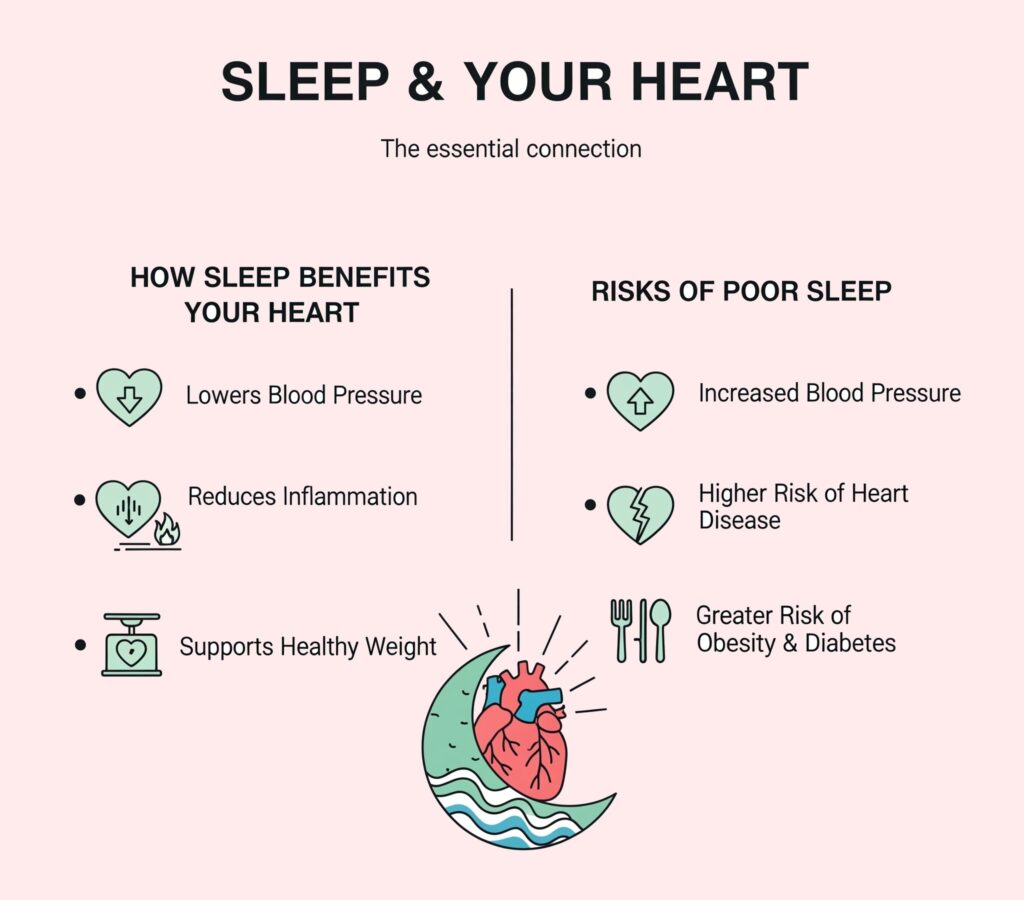
When sleep is poor or fragmented:
- • Blood pressure remains elevated overnight
- • Stress hormones stay high
- • Inflammation increases
- • Blood sugar regulation worsens
Research supported by the National Institutes of Health shows that poor sleep is linked to insulin resistance and cardiovascular disease.
If your sleep is broken, your heart is under constant strain.
Quantity vs Quality: Why “8 Hours” May Not Be Enough
Many patients believe that sleeping 7 to 8 hours is enough.
But sleep is not only about duration. It is about quality and structure.
Healthy sleep includes:
- • Deep sleep for physical repair
- • REM sleep for brain function
- • Stable breathing and oxygen levels
If your sleep is fragmented, even long hours may not be restorative.
Self-Assessment: 5 Questions to Evaluate Your Sleep
Ask yourself:
- • Do you wake up feeling refreshed without needing immediate caffeine?
- • Can you function through the day without fatigue or brain fog?
- • Are you consistently getting 7 to 9 hours of sleep?
- • Do you stay asleep through the night without frequent awakenings?
- • Has anyone noticed snoring, gasping, or pauses in your breathing?
If the answer is “no” to any of these, your sleep may need medical evaluation.
Why Cardiologists Take Sleep Seriously
Sleep disorders such as obstructive sleep apnea cause repeated drops in oxygen levels during the night.
This can lead to:
- • High blood pressure
- • Atrial fibrillation
- • Heart failure
According to the Centers for Disease Control and Prevention, insufficient sleep is linked to several chronic conditions, including heart disease.
Sleep is not separate from heart health. It is a major driver of it.
How We Evaluate Sleep at Athens Heart Center
We focus on identifying the root cause of poor sleep.
A home sleep study allows us to:
- • Monitor breathing patterns
- • Measure oxygen levels
- • Detect sleep apnea
- • Analyze sleep disruption
This is done in your own home with medical-grade accuracy.
Why Sleep Protects Your Healthspan
Health is not just about how long you live. It is about how well you live.
Sleep supports:
- • Cardiovascular function
- • Brain performance
- • Metabolic balance
- • Energy and daily function
Consistent, restorative sleep is one of the most powerful tools for protecting long-term health.
Frequently Asked Questions
Why does a cardiologist care about sleep
Sleep disorders directly affect heart function and increase the risk of hypertension and arrhythmias.
What is the difference between sleep quality and quantity
Quantity refers to hours slept. Quality refers to how restorative that sleep is.
Can poor sleep cause weight gain
Yes. It disrupts hunger hormones and insulin sensitivity, leading to increased appetite.
What is a home sleep study
It is a test that monitors breathing, oxygen levels, and sleep patterns at home.
Is snoring always a concern
Not always, but loud or irregular snoring can indicate sleep apnea.
Can I catch up on sleep later
No. Consistency is essential. Sleep debt cannot be fully recovered.
When should I seek help
If you have fatigue, poor sleep, or breathing issues at night, you should consult a specialist.
Conclusion
Sleep is no longer considered a luxury. It is a core pillar of cardiovascular health.
By treating sleep as a vital sign, we can detect risk earlier, prevent disease, and protect long-term health.
If your sleep is not restorative, your heart is not fully protected.
References
1. American Heart Association
Life’s Essential 8
https://www.heart.org/en/healthy-living/healthy-lifestyle/lifes-essential-8
2. National Institutes of Health
Sleep and metabolic function
https://www.nhlbi.nih.gov/health/sleep-deprivation
3. Centers for Disease Control and Prevention
Sleep and chronic disease
https://www.cdc.gov/sleep/about_sleep/chronic_disease.html
4. American Academy of Sleep Medicine
Sleep apnea diagnosis and treatment
https://aasm.org/resources/factsheets/sleepapnea.pdf
Share Your Thoughts
No comments yet — be the first to comment!