Board Certified in Cardiovascular Disease and Sleep Medicine
Athens Heart Center & Specialty Clinics, Athens, GA
Last updated on April 6, 2026
Weight loss is rarely a straight path.
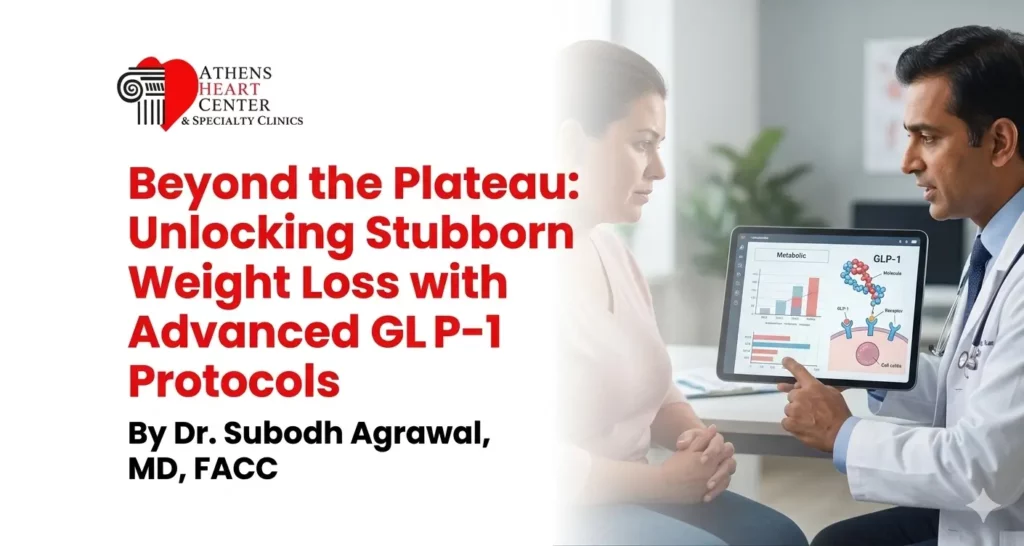
Medications like semaglutide and tirzepatide have transformed how we treat obesity and metabolic disease. Many patients see excellent results.
But not everyone does.
If you are taking a GLP-1 medication and not losing weight as expected, it is not a failure of effort or discipline. It simply means your body needs a more personalized and structured approach.
At Athens Heart Center, we focus on understanding why your body is not responding and what can be done to correct it.
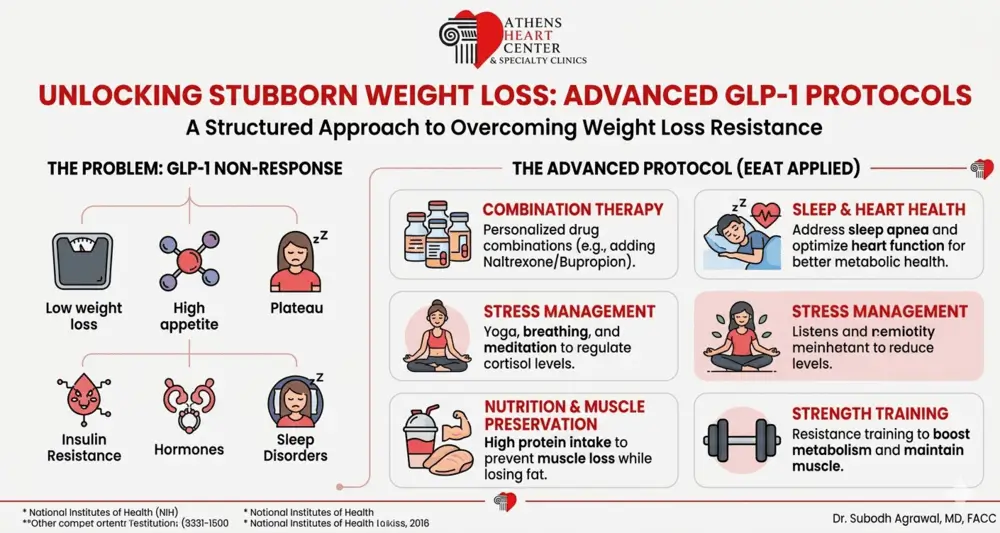
Who Is a GLP-1 Non-Responder
In clinical practice, a patient may be considered a non-responder if:
Less than 2 percent weight loss occurs in the first 4 weeks
Less than 5 percent weight loss is achieved after 6 months
Appetite suppression is minimal
Weight plateaus early
Instead of asking patients to try harder, we evaluate deeper biological causes.
Why Weight Loss Stalls on GLP-1 Therapy
Weight loss resistance is rarely due to a single factor.
Insulin Resistance
Even with GLP-1 therapy, severe insulin resistance can continue to drive fat storage.
Hormonal Imbalance
Thyroid dysfunction, cortisol elevation, and metabolic shifts can interfere with progress.
Sleep Disorders
As supported by research from the National Institutes of Health, poor sleep and conditions like obstructive sleep apnea worsen metabolic health and reduce weight loss efficiency.
Stress and Cortisol
Chronic stress increases cortisol, which promotes fat retention, especially around the abdomen.
Incomplete Treatment Strategy
Medication alone cannot compensate for gaps in nutrition, sleep, or movement.
The Advanced Protocol: A Multi-Layered Approach
At Athens Heart Center, we follow a structured approach combining medical science with lifestyle optimization.
1. Combination Pharmacotherapy
When a single medication is not sufficient, we may introduce carefully selected combination therapy.
Clinical evidence shows that adding agents like naltrexone and bupropion can improve outcomes in patients who initially do not respond to GLP-1 therapy.
In selected cases, additional medications may be used under strict medical supervision to restore progress.
2. Sleep and Cardiovascular Optimization
Sleep is a critical but often overlooked factor.
Untreated sleep apnea leads to:
Oxygen fluctuations
Increased blood pressure
Higher stress hormone levels
Treating sleep disorders improves both heart health and weight loss outcomes.
3. Stress Reduction and Mind-Body Balance
Chronic stress directly impacts metabolism.
Structured practices such as yoga, breathing techniques, and meditation help regulate the nervous system and support weight loss from a biological standpoint.
4. Nutrition and Muscle Preservation
Weight loss must focus on fat loss, not muscle loss.
We emphasize:
High protein intake
Balanced nutrition
Sustainable dietary patterns
5. Strength and Metabolic Activity
Resistance training is essential.
Maintaining muscle mass helps preserve metabolic rate and prevents long-term weight regain.
5 Self-Assessment Questions
Ask yourself:
Have I been on GLP-1 therapy for more than 4 weeks without meaningful weight loss?
Has my progress stopped despite following a structured plan?
Do I still experience strong cravings or food noise?
Do I feel fatigued or suspect poor sleep quality?
Are side effects preventing me from reaching the recommended dose?
If you answer yes to any of these, it is time for a deeper evaluation.
Frequently Asked Questions
Is it safe to combine weight loss medications
Yes, when supervised by a specialist. Combination therapy can improve results without increasing risk when properly managed.
Why is sleep so important for weight loss
Poor sleep increases hunger hormones and worsens insulin resistance, making weight loss more difficult.
Can stress really affect weight loss
Yes. Elevated cortisol promotes fat storage and reduces metabolic efficiency.
Do I still need to diet on medication
Yes. Medication supports your biology, but nutrition determines your results.
What kind of exercise is most important
Resistance training is essential to maintain muscle and metabolic rate.
Will I need medications long term
Not always. The goal is to use medication to achieve results while building sustainable habits.
What if nothing has worked for me so far
Most patients have not failed treatment. They simply have not yet received the right combination of therapies.
Conclusion
If your weight loss has stalled, it is not the end of the road.
It is a signal that your treatment needs refinement.
With the right combination of medical therapy, metabolic correction, and lifestyle alignment, progress is achievable.
Call to Action
At Athens Heart Center & Specialty Clinics, we specialize in personalized, science-based weight management for patients who are not seeing results with standard approaches.
If your current plan is not working, it is time to understand why and take the next step.
“As supported by clinical research from the National Institutes of Health, individual response to GLP-1 receptor agonists varies due to metabolic and genetic factors.” 🔗 https://www.ncbi.nlm.nih.gov/pmc/articles/PMC6399692/
2. Obesity as a Multifactorial Disease
“According to the Centers for Disease Control and Prevention, obesity is a complex condition influenced by behavior, genetics, metabolism, and environment.” 🔗https://www.cdc.gov/obesity/basics/causes.html
3. Role of Sleep in Weight & Metabolism
“As highlighted by the National Institutes of Health, poor sleep and sleep apnea significantly impact metabolism, insulin resistance, and weight regulation.” 🔗https://www.ncbi.nlm.nih.gov/books/NBK19961/
4. Sleep and Hormonal Regulation (Leptin/Ghrelin)
“Research supported by the National Institutes of Health shows that sleep deprivation alters hunger hormones such as leptin and ghrelin, increasing appetite and weight gain risk.” 🔗https://www.ncbi.nlm.nih.gov/pmc/articles/PMC535701/
5. Importance of Lifestyle + Medication Combination





Share Your Thoughts
No comments yet — be the first to comment!