
A Patient's Journey: Misdiagnosing Tardive Dyskinesia as a Dental Problem
By Dr. Aurelio Manto MD Primary Care and Geriatric Medicine Specialist Athens Heart Center & Specialty Clinics | Athens, Georgia
When we experience localized pain, our first instinct is to treat that specific area. A tooth problem usually means a trip to the dentist. However, the human nervous system is deeply interconnected. Sometimes, physical symptoms in one area are actually a neurological warning sign caused by medication.
As a primary care and geriatric specialist in Athens, Georgia, I frequently see complex medication interactions. Here is a real-world case study of a patient who went to the dentist for a problem that ultimately required a neurological intervention.
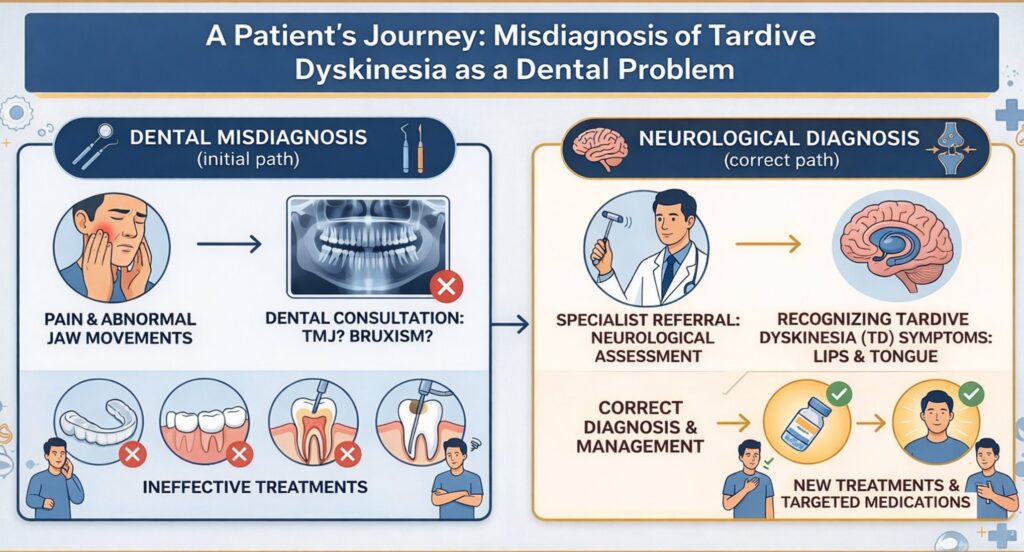
The Patient's Dilemma: Tongue Writhing and Dental Pain
- • The Patient: A 58-year-old female with a history of clinical depression.
- • The Symptom: She began experiencing uncontrollable, writhing movements of her tongue. These repetitive movements caused her to constantly cut her tongue against her teeth, leading to significant daily pain.
• The Misdirection: Believing this was a structural dental issue, she booked an appointment with her local dentist. Her desperate request was to have the dentist grind down the inside of her teeth so she would stop injuring her tongue.
The Breakthrough Diagnosis: Unmasking Tardive Dyskinesia
Thankfully, the patient eventually came to my clinic for an evaluation. Upon observing her symptoms, the real culprit was immediately clear: it was not a dental issue.
She was suffering from Tardive Dyskinesia (TD).
Tardive Dyskinesia is a neurological movement disorder characterized by repetitive, involuntary muscle movements. While this patient’s primary complaint was her tongue, TD can affect various parts of the body.
Common Symptoms of Tardive Dyskinesia
- • Lip smacking, puckering, or chewing motions
- • Rolling, protruding, or writhing of the tongue
- • Rapid eye blinking or involuntary facial grimacing
- • Tapping fingers, swaying, or jerky movements of the arms and legs
The Hidden Culprit: Medication Side Effects (Abilify)
What caused this sudden, distressing condition? A review of her medical history revealed the answer.
To manage her depression, the patient was taking aripiprazole (Abilify). While Abilify is an effective and commonly prescribed atypical antipsychotic used for depression and mood disorders, it belongs to a class of drugs that can trigger Tardive Dyskinesia.
Clinical Note on TD: Tardive Dyskinesia is an unusual but highly serious side effect. It can persist—and sometimes become permanent – even after the patient discontinues the offending medication.
The Resolution: Targeted TD Treatment
Once we established the correct diagnosis, we shifted the focus from dental modification to targeted neurological treatment.
I prescribed valbenazine (Ingrezza), a medication specifically FDA-approved to treat the involuntary movements associated with Tardive Dyskinesia.
The results were excellent and rapid. Within just one week of starting Ingrezza, the writhing movements of her tongue completely stopped. Her oral pain resolved, and she avoided an unnecessary and irreversible dental procedure.
Frequently Asked Questions
1.What doctor treats Tardive Dyskinesia?
Tardive Dyskinesia is typically diagnosed and treated by a psychiatrist, a neurologist (specifically a movement disorder specialist), or an experienced primary care/geriatric physician familiar with complex psychopharmacology.
2.Can depression medication cause involuntary tongue movements?
Yes. Certain medications used to treat depression, bipolar disorder, and schizophrenia (particularly antipsychotics like aripiprazole/Abilify) can cause involuntary tongue, facial, or body movements. This condition is known as Tardive Dyskinesia.
3.Should I stop taking my medication if I suspect Tardive Dyskinesia?
No. You should never abruptly stop taking psychiatric medications without consulting your doctor, as this can cause severe mental health relapses or withdrawal symptoms. Contact your prescribing physician immediately to formulate a safe transition plan or to add a movement-calming medication like Ingrezza or Austedo.
4.What are the first signs of Tardive Dyskinesia?
The first signs are usually subtle, involuntary facial movements like frequent blinking, lip smacking, or slight tongue twitching. These repetitive motions are often painless at first and may only be noticed by others.
5.Is Tardive Dyskinesia permanent?
It can be, but early intervention is key. While some cases become permanent, many patients see significant improvement or total resolution by starting treatments like Ingrezza or safely adjusting their primary medication under a doctor’s care.
6.How do I distinguish between a dental problem and a neurological issue?
A dental problem usually involves sensitivity or localized tooth pain. A neurological issue like TD involves uncontrollable muscle movements (like tongue writhing) that cause the pain by pushing the tongue against the teeth.
7.Can Abilify cause permanent tongue movements?
Yes, Tardive Dyskinesia (TD) caused by medications like Abilify can become permanent if not caught early. While some cases resolve after adjusting medication or starting treatments like Ingrezza, others may persist indefinitely. Immediate consultation with a specialist is required.
8.Is it common to mistake TD for a dental issue?
Yes, it is very common for patients to first visit a dentist for TD symptoms because the involuntary tongue and jaw movements often cause mouth pain, tooth wear, or tongue biting. A primary care physician or neurologist should evaluate any “dental” pain that involves rhythmic, uncontrollable muscle motions.
9.How fast does Ingrezza work for tongue writhing?
Many patients see a significant reduction in involuntary movements within 1 to 2 weeks of starting Ingrezza (valbenazine). In the case study above, the patient’s tongue writhing stopped completely after just seven days of treatment.
Medical Content Policy: This information is reviewed by Dr. Aurelio Manto, MD, and based on FDA-approved clinical guidelines for Valbenazine and Aripiprazole.
what a story, thank you for sharing Dr Manto