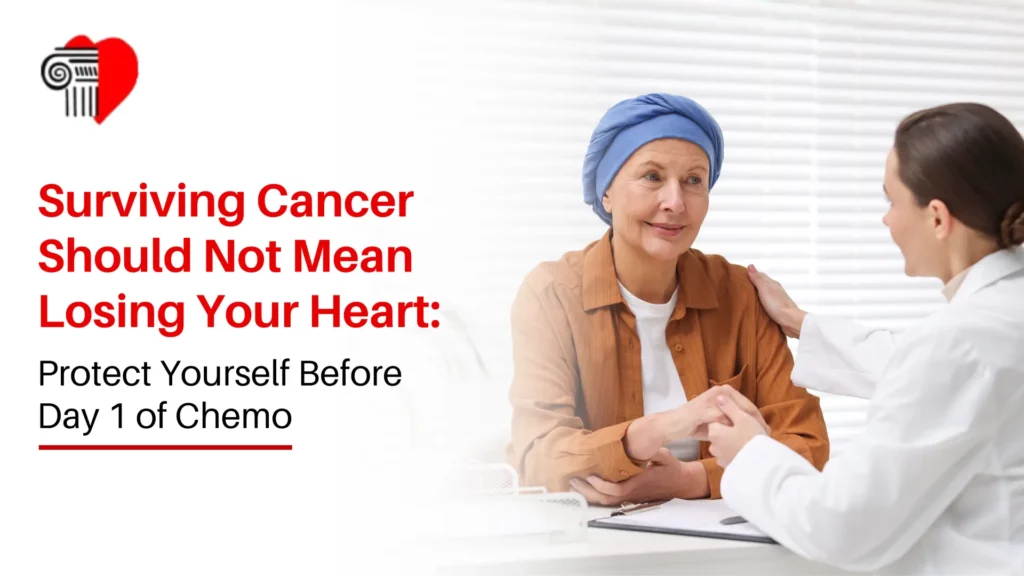
Surviving Cancer Should Not Mean Losing Your Heart: Protect Yourself Before Day 1 of Chemo
The words “you have cancer” are not easy to hear. The initial reaction is to want to receive treatment as quickly as possible.
However, another important factor is not always discussed. That factor is protecting your heart.
Cancer treatments are more effective than they have ever been in saving more lives. However, some of these treatments can be very damaging to the heart. These include chemotherapy drugs, radiation therapy, and immunotherapy.
The impact of these treatments is called cardiotoxicity. This can weaken the heart muscle and can ultimately lead to heart failure or an abnormal heart rhythm months or even years after treatment is completed.
In fact, after second cancers, cardiovascular disease is one of the most common causes of health complications in cancer survivors.
The good news is that you don’t have to choose between fighting your cancer and protecting your heart. There is a special field called cardio oncology.
Why You Should See a Cardiologist Before Treatment
Waiting for signs such as chest pain, tiredness, or breathlessness may be too late. Damage to the heart could already be done at this time.
Medical guidelines currently advise that cancer treatments’ impact on heart health be checked first.
Seeking a cardiologist’s help sooner will be more helpful for protection.
How We Protect the Heart Before Treatment
Baseline Heart Evaluation
Imaging studies are done to see how well the heart is functioning before any treatment begins.
Genetic Risk Assessment
Specialized testing can reveal genetic changes that can affect sensitivity to chemotherapy drugs, such as SLC28A3 (Solute Carrier Family 28 Member 3) and RARG (Retinoic Acid Receptor Gamma).
Preventive Medications
For those who are more at risk, preventive medications can be recommended. This can include beta blockers, SGLT2 inhibitors, and other medications to assist with heart function during treatment.
Take Control: Questions to Ask Your Oncologist
- Are any treatments in my plan known to affect the heart
- Can I see a cardiologist before starting therapy
- Will my heart function be monitored during treatment
- Do my personal or family risk factors increase my risk
- Are there medications that can protect my heart during treatment
Why Cardio Oncology Matters
- Cardio oncology bridges the gap between cancer care and heart health.
- The goal is simple. Treat cancer effectively while protecting long term cardiovascular health.
- This approach improves not only survival, but also quality of life after treatment.
Conclusion
Cancer treatment is a major journey, and every decision matters.
Protecting your heart from the very beginning can prevent serious complications later.
You do not have to wait for symptoms. You can take action before treatment starts.
Make sure your care plan includes both your oncologist and a cardiologist.
Because surviving cancer should also mean living a healthy life afterward.
References
- National Cancer Institute — https://www.cancer.gov/about-cancer/treatment/side-effects
- American Heart Association — https://www.heart.org/en/health-topics/cardiomyopathy
- National Institutes of Health — https://www.ncbi.nlm.nih.gov
- American College of Cardiology — https://www.acc.org
- European Society of Cardiology — https://www.escardio.org
- MedlinePlus — https://medlineplus.gov



Share Your Thoughts
No comments yet — be the first to comment!