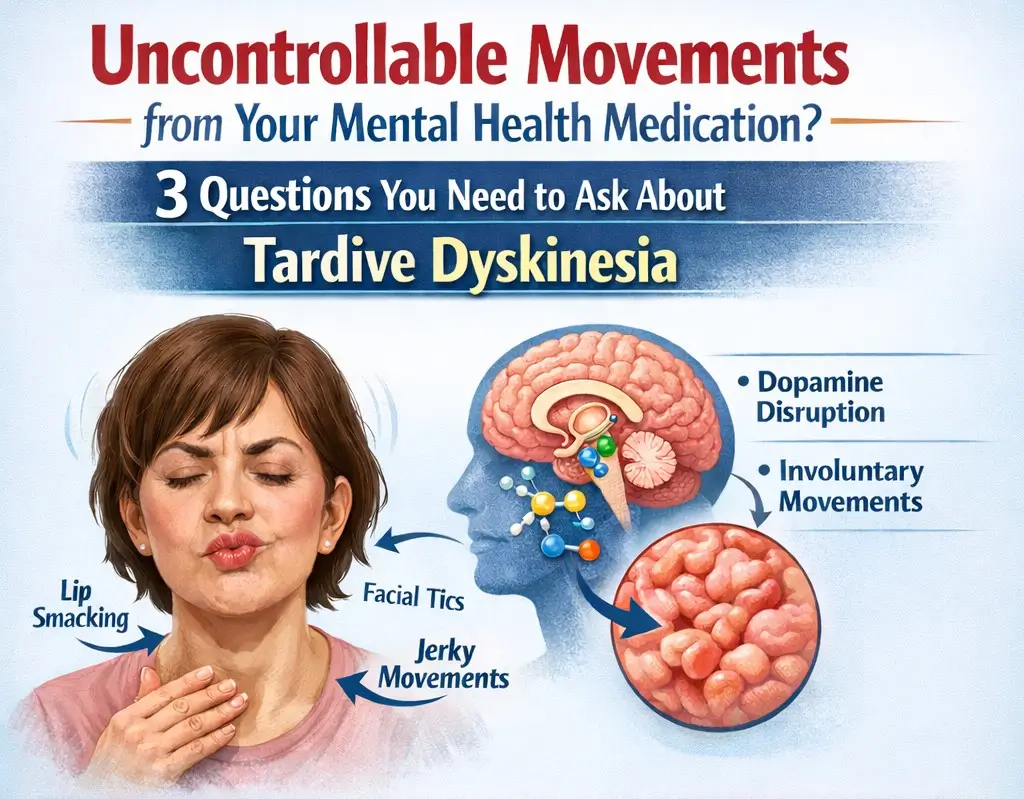
Noticing Uncontrollable Movements Like Twitching or Blinking? What You Should Know About Your Mental Health Medication
3 Questions You Need to Ask About Tardive Dyskinesia | Expert Care in Athens, GA
Author: Aurelio Manto MD, Athens Heart center and speciality clinics Athens, GA
Mental health medications, particularly antipsychotics prescribed by your psychiatrist, can be absolutely life-saving for managing complex conditions like bipolar disorder, major depression, or schizophrenia.1 However, while these medications protect your mental well-being, long-term use can sometimes trigger a frustrating and physically disabling neurological side effect known as Tardive Dyskinesia (TD).2
If you or a loved one are experiencing new, repetitive muscle movements that you cannot control, you do not have to suffer in silence. At Athens Heart Center and Specialty Clinics, Dr. Aurelio Manto and Dr. Subodh Agrawal are Athens, Georgia’s leading medical experts in recognizing and successfully treating medication-induced movement disorders.
Understanding Tardive Dyskinesia
Tardive Dyskinesia is characterized by stiff, jerky, or repetitive involuntary movements, most commonly affecting the face, lips, tongue, and jaw, though it can also cause restlessness in the limbs and torso.1
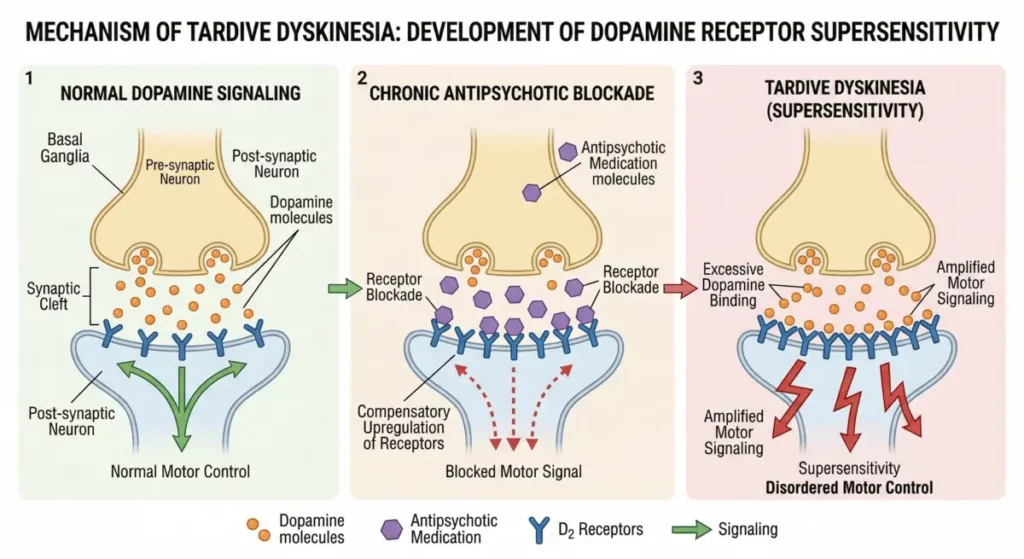
Because antipsychotic medications block dopamine receptors in the brain, long-term use can cause the brain’s motor control centers to become hypersensitive to dopamine.3 This dopamine hypersensitivity, combined with oxidative stress and damage to specific cellular pathways (such as the GABAergic system), creates a chemical imbalance that leads to chaotic, uncontrollable muscle movements.34
If left untreated, TD can become a chronic and persistent condition, severely impacting your quality of life.5 Patients with untreated TD often face profound physical challenges, including difficulty swallowing, speech impairments, and dangerous respiratory issues.671 The continuous, forceful jaw clenching associated with the condition can even lead to devastating dental complications, such as fractured teeth and damaged implants.8
3 Questions You Should Ask If You Are Having Symptoms
Because TD can sometimes be mistaken for general restlessness or a symptom of the underlying mental health condition, early recognition is crucial. If you notice these movements, we recommend asking your medical team these three questions:
1. Are these repetitive movements a side effect of my psychiatric medication?
Symptoms like lip-smacking, rapid blinking, grimacing, or tapping fingers are classic early warning signs of TD.19 Identifying that these movements are medication-induced is the first critical step toward getting the right help.
2. Can these symptoms be treated without stopping my mental health medications?
Yes. You should never abruptly stop taking your psychiatric medications, as doing so can trigger a severe psychiatric relapse and may even temporarily worsen your involuntary movements, a phenomenon known as “unmasking”.10,11 Our experts can manage your TD while ensuring your mental health remains stable.
3. Am I a candidate for new, targeted treatments like Ingrezza?
The medical management of TD has been revolutionized by a new class of FDA-approved medications called VMAT2 inhibitors, such as Ingrezza (valbenazine).12,13 These medications work specifically in the brain to normalize dopamine levels and suppress involuntary movements without interfering with the antipsychotic medications prescribed by your psychiatrist.14
Why Choose Athens Heart Center and Specialty Clinics?
When dealing with complex medication side effects, you need a specialized team that looks at the whole picture. Dr. Aurelio Manto, a board-certified specialist in Internal and Geriatric Medicine with over 31 years of experience, and Dr. Subodh Agrawal, a highly credentialed expert in Cardiology, Internal Medicine, and Pain Management, provide unparalleled, comprehensive care right here in Athens, GA.
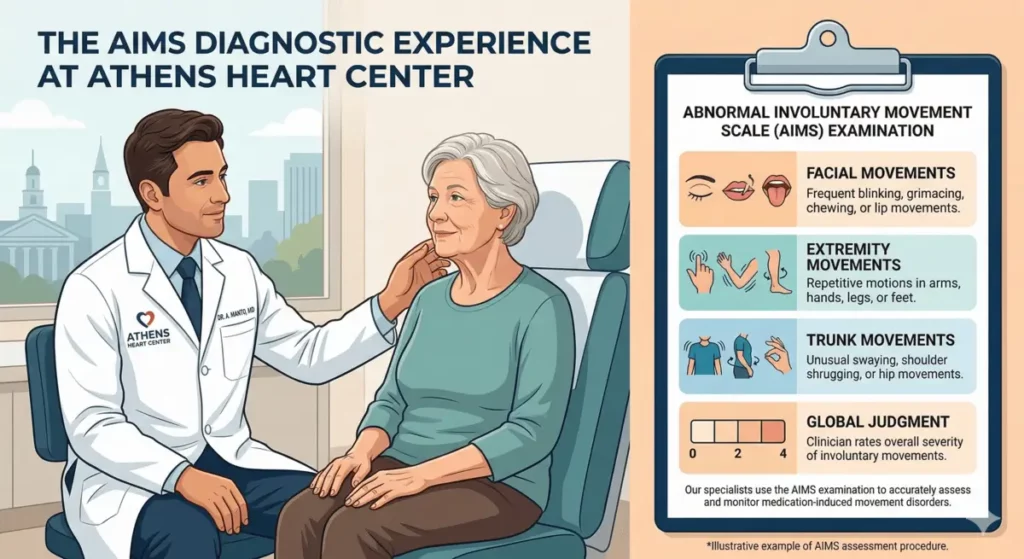
We understand the deep pathophysiology of Tardive Dyskinesia and the profound impact it can have on your daily functioning and social confidence.3,15 Our clinic excels at early symptom recognition and works to identify when advanced therapies like Ingrezza may be appropriate to help manage the progression of the disorder and support long-term neurological health.1,35
You shouldn’t have to choose between your mental health and control over your own body. If you suspect you are developing Tardive Dyskinesia from your psychiatric medications, contact Athens Heart Center and Specialty Clinics today for a comprehensive evaluation.
Frequently Asked Questions (FAQs) by Patients and Caregivers
- What is Tardive Dyskinesia and what causes it?
Tardive Dyskinesia is a medication-induced movement disorder that causes repetitive, involuntary muscle movements.16 It is most commonly caused by the long-term use of dopamine receptor-blocking agents, such as antipsychotics, which are often prescribed for mental health conditions.
- What are the early signs of Tardive Dyskinesia?
The early signs of Tardive Dyskinesia usually manifest in the facial region. These include subtle, uncontrollable movements such as rapid blinking, lip-smacking, tongue thrusting, grimacing, or chewing motions.
- How do you treat Tardive Dyskinesia without stopping antipsychotics?
It is highly recommended that you do not stop your antipsychotic medication abruptly, as this can cause a psychiatric relapse and temporarily worsen movements (a phenomenon called unmasking).10 Instead, Tardive Dyskinesia treatment involves adding a VMAT2 inhibitor to your regimen, which successfully suppresses the involuntary muscle movements without interfering with your underlying mental health care.
- What is Ingrezza used for?
Ingrezza for Tardive Dyskinesia is an FDA-approved prescription medication known as a VMAT2 inhibitor. It works by adjusting the dopamine levels in the brain to reduce uncontrollable movements of the face, tongue, and other body parts, offering a powerful antipsychotic side effects treatment.
- Who treats Tardive Dyskinesia in Athens, GA?
If you are looking for a Tardive Dyskinesia Doctor Athens Georgia, Dr. Aurelio Manto and Dr. Subodh Agrawal at Athens Heart Center and Specialty Clinics are highly experienced in diagnosing and managing these complex conditions.
- Why choose an Athens GA Movement Disorder Specialist?
Treating the neurological side effects of psychiatric drugs requires balancing movement control with mental health stability. As an established Northeast Georgia Primary Care and Neurology affiliated clinic, our team provides the specialized evaluation, monitoring, and advanced therapeutics necessary for comprehensive relief.
- How can I help my loved one access treatment?
Caregivers should monitor their loved ones for any new, abnormal movements and seek a formal evaluation. Dr. Aurelio Manto Athens GA and Dr. Subodh Agrawal Athens GA utilize structured assessments (like the AIMS scale) to diagnose the condition accurately and will advocate on your behalf to help secure insurance coverage for advanced treatments.
Get a Professional Evaluation in Athens, Georgia
If you suspect you or a loved one may be developing Tardive Dyskinesia, our team at Athens Heart Center and Specialty Clinics is here to help. We provide the clinical assessments and specialized care needed to manage these symptoms.
Call us at 706-208-9700 to schedule your evaluation.






Helpful article , Dr Manto you made a difficult topic so easy to understand. Thank you.